

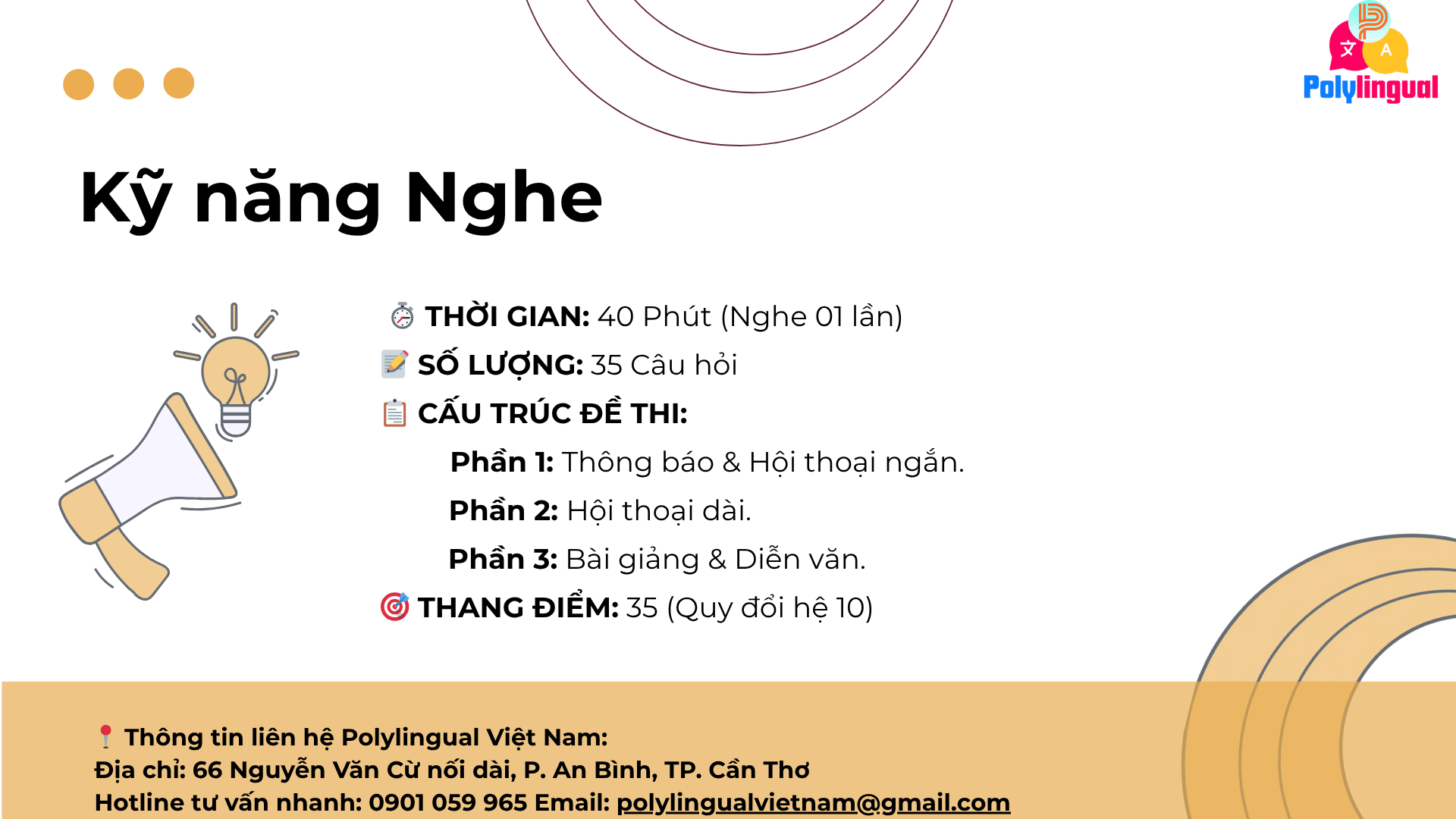
PART 1 – QUESTION 1 – 8
Question 1. What kind of site is being toured?
A. A museum
B. A factory
C. A safety inspection office
D. A chemical lab
Question 2. Where does this announcement take place?
A. On a coach
B. An airport
C. On a trainf
D. A train station
Question 3. Who presently owns the farm?
A. Speaker's family
B. Museum
C. Fado Produce Company
D. The government
Question 4. What is being advertised?
A. A book
B. A course
C. A bank
D. A store
Question 5. When is the flight expected to start boarding?
A. In 45 minutes
B. In an hour
C. In an hour and a quarter
D. In a hour and a half
Question 6. Where is the Angel Room?
A. On this floor
B. On the next floor up
C. On the next floor down
D. Two floors down
Question 7. What is NOT available on the ground floor of the library?
A. Computers
B. Information desk
C. Photocopying facilities
D. Books
Question 8. What does the woman want the man to do first?
A. Read some information
B. A quiz
C. Fix the computers
D. See the building
PART 2 – QUESTION 9 – 20
Questions 9 to 12 refer to the following conversation
Question 9. Who is the man?
A. A professor
B. An office worker
C. Professor Denton's assistant
D. A student
Question 10. When does the man come to see Professor Denton?
A. During regular class hours
B. Just before class time
C. As soon as class is finished
D. During office hours
Question 11. Why does the man come to see Professor Denton?
A. To turn in an assignment
B. To ask a question
C. To pick up a completed test
D. To explain why he did not attend class
Question 12. What incorrect information did the man have?
A. The date the assignment was due
B. The page number of the assignment
C. The length of the assignment
D. The numbers of the assignment questions
Questions 13 to 16 refer to the following conversation
Question 13. What is the woman's status at the university?
A. She's a junior
B. She's a senior
C. She's graduated student
D. She's a transfer student
Question 14. What does the man want to learn from the woman?
A. How to transfer to a junior college
B. How to find his way around campus
C. Who won the campus election
D. What courses are required for a literature major
Question 15. How many total courses must a student take for a literature major?
A. Three
B. Five
C. Eight
D. Ten
Question 16. The man will probably take his elective courses in which area?
A. Surveying
B. World literature
C. Literary analysis
D. American literature
Questions 17 to 20 refer to the following conversation
Question 17. Where did the woman learn about dolphins?
A. From a lecture
B. In a book
C. From a television program
D. During a trip that she have taken
Question 18. Why do dolphins use clicks?
A. To communicate with other dolphins
B. To recognize objects in the water
C. To learn human language
D. To express fear
Question 19. Approximately how many human commands have some
dolphins learned?
A. Five hundred
B. Fifty
C. Fifteen
D. Five
Question 20. What does the man say about dolphin intelligence?
A. It is limited.
B. It is greater than human intelligence.
C. It is less than previously thought.
D. We are beginning to learn how much they have.
PART 3 – QUESTION 21 – 35
Questions 21 to 25 refer to the following lecture
Question 21. What is a pigment?
A. A chemical used for cleaning painting equipment
B. A cover to protect paintings from the effects of sunlight
C. A substance that gives its color to another material
D. A synthetic fabric that is suitable for painting on
Question 22. According to the instructor, what characteristic should a pigment have?
A. No loss of strength when dissolved
B. No harmful reaction with other pigments
C. Ability to be applied at any temperature
D. Ability to dry quickly after application
Question 23. How are pigment generally classified?
A. By origin
B. By texture
C. By color
D. By quality
Question 24. Which natural pigment did the Romans obtain from a shellfish?
A. Ochre
B. Indigo
C. Raw umber
D. Tyrian purple
Question 25. According to the instructor, why are synthetic pigments
superior to natural pigments?
A. They last for a longer time
B. They have a smoother surface
C. They're less expensive
D. They don't provide brighter colors
Questions 26 to 30 refer to the following professor's talk
Question 26. How does the professor develop the topic of tsunamis?
A. By comparing tsunamis and floods
B. By describing process of tsunamis
C. By giving example of tsunamis
D. By sharing his experience of a tsunami
Question 27. Why is the term "tidal wave" inaccurate for a tsunami?
A. Tsunamis occur only at high tide
B. Tsunamis are not related to tides
C. Tides cause only the worst tsunamis
D. Waves do not have enough force to kill
Question 28. What causes tsunamis?
A. Movement of the land
B. Heavy precipitation
C. Undersea earthquakes
D. The moon's gravity
Question 29. What point does the professor make about the eruption of
the volcano Krakatoa?
A. The eruption caused thousands of fishing boat to sink
B. Krakatoa erupts more frequently than any other volcano
C. People could see the eruption from as far away as Hawaii
D. A tsunami following the eruption killed thousands of people
Question 30. What is true of the tsunami that struck Japan in 1896?
A. It was caused by an undersea earthquake
B. It occurred while people were sleeping
C. It followed a series of volcanic eruptions
D. It was first reported by fishermen at sea
Questions 31 to 35 refer to the following lecture
Question 31. What do the initials PWR stand for?
A. Potential water resource
B. Potential water reactor
C. Pressurized water resource
D. Pressurized water reactor
Question 32. How many PWRs are there on Three-Mile island?
A. Two
B. Three
C. Four
D. Five
Question 33. What does the lecture say about the PWRs during the accident?
A. There were no problems with the PWRs
B. There was a problem with only one of the PWRs
C. There were problems with one PWR after another
D. There were problems in more than one PWR at the same time
Question 34. What errors did the operators make?
A. They thought that the water was too cold
B. They thought that there was too little water
C. They thought that there was too much water
D. They thought that the water was too hot
Question 35. What events are the professor mentioned in the lecture?
A. The cooling water was open
B. The cooling value stuck shut off
C. A partial meltdown occurred
D. Instruments weren't misread